The Golf Cart Doesn't Come With the House: What Peachtree City Closings Miss
September 17, 2026
September 17, 2026
Does the golf cart in the garage belong to the house, or to the person who bought it? Most buyers in Peachtree City never ask, because the cart is sitting right there during the showing, parked next to the water heater, looking as permanent as the driveway. The seller drives it to the mailbox. The listing photos show it charging by the side door. Everyone assumes it goes with the sale the same way the dishwasher does.
It doesn't. A golf cart in Peachtree City is personal property, not a fixture, and the city runs its own registration system for carts that has nothing to do with who holds the deed. That system moves faster than most closings do, which is exactly where the trouble starts.
A home sale in Georgia typically closes on a schedule measured in weeks: inspection period, financing contingency, final walkthrough, closing table. The city's golf cart paperwork runs on a schedule measured in days. Anyone who buys a used cart, whether from a stranger or from the seller of the house they're closing on, has ten days to register it in their own name. Anyone who sells a cart has the same ten-day window to notify the city that it changed hands.
Ten days is shorter than most escrow periods. A buyer who closes on a Tuesday and doesn't think about the cart until moving day the following weekend has already burned through the window without realizing a window existed.
The city is direct about what a current-looking decal actually proves. A valid sticker on the cart does not mean the registration is still good once the cart changes owners. The plastic tag on the front of a cart tells a police officer that a cart was properly registered to somebody. It says nothing about whether that somebody is still the legal owner. Buyers who assume a fresh-looking decal means they're covered are working from a false signal.
To move a previously owned cart into a new owner's name, the seller completes an Ownership Release Form, and the buyer registers the cart at City Hall with proof of ownership, a photo ID, and the registration fee. This is a separate errand from anything a real estate closing handles. No title company processes it. No closing attorney includes it in the settlement statement. It happens at City Hall, on paper, on its own timeline.
The city was blunt about the stakes in its own guidance to buyers of used carts:
"Don't assume the seller's registration automatically transfers to you."
That single line is the whole argument for treating the cart as a separate transaction from the house. If a purchase agreement lists the cart as an included item, that agreement settles who owns it. It does not touch what the city has on file, and the city is the party that decides whether the cart can legally be on the path system at all.
Anyone closing on a Peachtree City home this fall inherited a registration cycle that changed less than a year ago. In October 2025, the City Council amended the Motorized Cart Ordinance to require decals on both the front and rear of every cart, replacing the older single-decal placement. The rollout pushed the entire renewal calendar back: resident carts came due for a new three-year cycle, covering 2026 through 2028, with notices mailed in January 2026 and payment due by March 31, 2026, for a total of $45. Carts registered under that cycle carry a sticker valid through December 31, 2028. Miss the deadline and a $20 late fee applies.
That deadline has already passed as of this writing. A cart currently sitting in a Peachtree City garage should already carry the new front-and-rear decals if the previous owner renewed on time. If they didn't, the buyer inherits whatever compliance gap the seller left behind, on top of the separate question of whether ownership itself has been formally transferred.
Non-resident owners, meaning anyone who keeps a cart registered to a Peachtree City address but lives outside city limits, pay on a different structure entirely: a $15 annual registration plus a $235 annual path user fee, for a combined $250 a year. That distinction matters for anyone buying a home just outside the city line who still wants path access, or for an out-of-town owner keeping a second cart registered locally.
| Registration type | Cost | Cycle |
|---|---|---|
| Resident (current cycle) | $45 total | 3 years, through Dec. 31, 2028 |
| Non-resident | $250 per year ($15 registration + $235 path fee) | Annual |
| Late renewal | $20 penalty | Applies to either category |
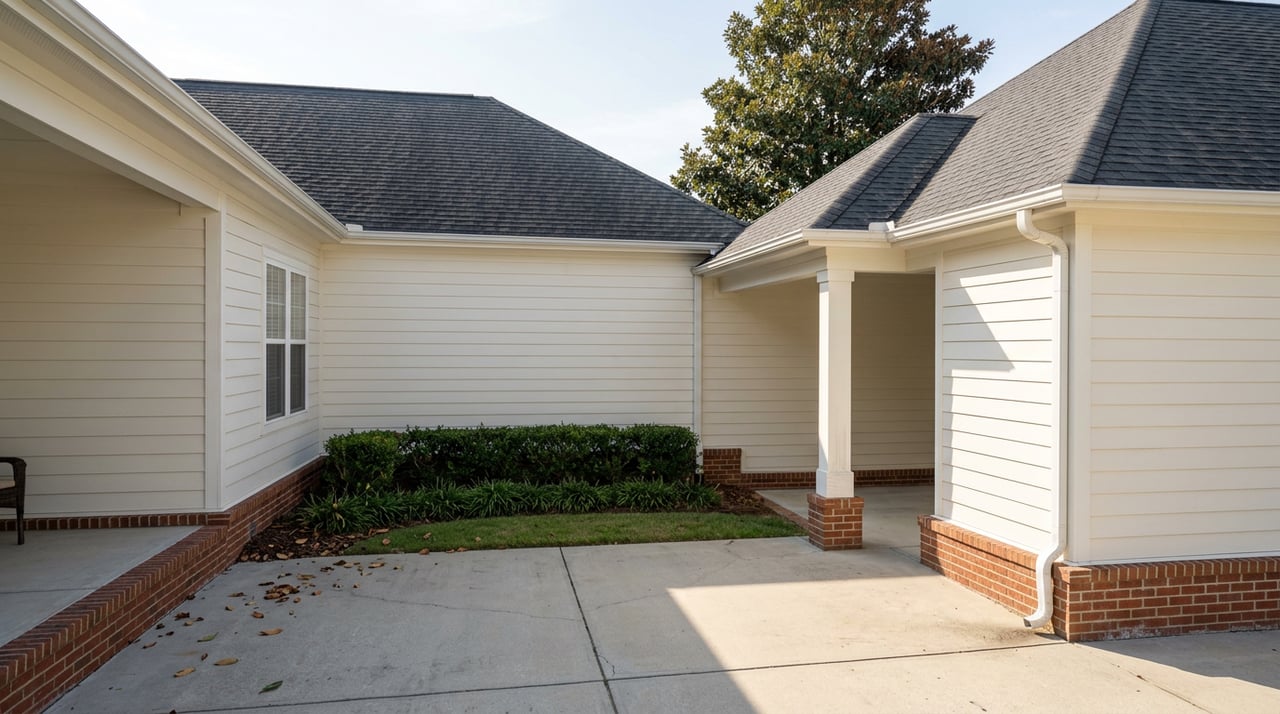
The cart itself isn't the only piece of this that runs on city code rather than closing paperwork. Sellers who add a dedicated golf cart garage before listing, or buyers who plan to build one after closing, are working inside two specific requirements pulled straight from the city's own building permit records. A cart garage has to match the same facade as the house, so a mismatched addition can hold up a permit before it ever reaches a buyer's punch list. And any structure built near a path has to sit at least four feet from the edge of the cart path pavement, with permit approval conditional on that setback being met.
Neither requirement shows up in a standard home inspection. Both show up the moment someone tries to pull a permit for an addition that was framed without checking the path line first.
None of this makes Peachtree City's cart culture less of a genuine draw. It means the golf cart and the house are two different pieces of property law wearing one lifestyle. Treating them as a single bundled asset is the assumption that causes the friction, not the cart itself.
A few things worth confirming before signing anything:
None of these questions are complicated. They're just easy to skip when the cart looks like it's always been part of the house.
Does a golf cart automatically transfer with a Peachtree City home sale? No. The cart is personal property. It needs its own bill of sale and a separate registration filed with the city in the new owner's name, regardless of what the real estate purchase agreement says.
What happens if the registration transfer is never filed? The cart can end up operating on the path system under an owner of record who no longer owns it, which creates liability questions for both parties and can result in late fees or an invalid registration if the city's paperwork is never updated.
Do I need a permit to add a golf cart garage? Yes. Recent city permit records show two specific requirements: the garage must match the home's existing facade, and the structure must sit at least four feet from the edge of any adjacent cart path pavement.
Buying or selling in Peachtree City means thinking through details like this well before closing day, not after the moving truck leaves. If you're weighing a move here, or wondering what your current home and cart setup are actually worth in today's market, the team at Pristine Realty Group can walk through the specifics with you. Start with an Instant Home Valuation and we'll take it from there.
Stay up to date on the latest real estate trends.


Get assistance in determining current property value, crafting a competitive offer, writing and negotiating a contract, and much more. Contact us today.