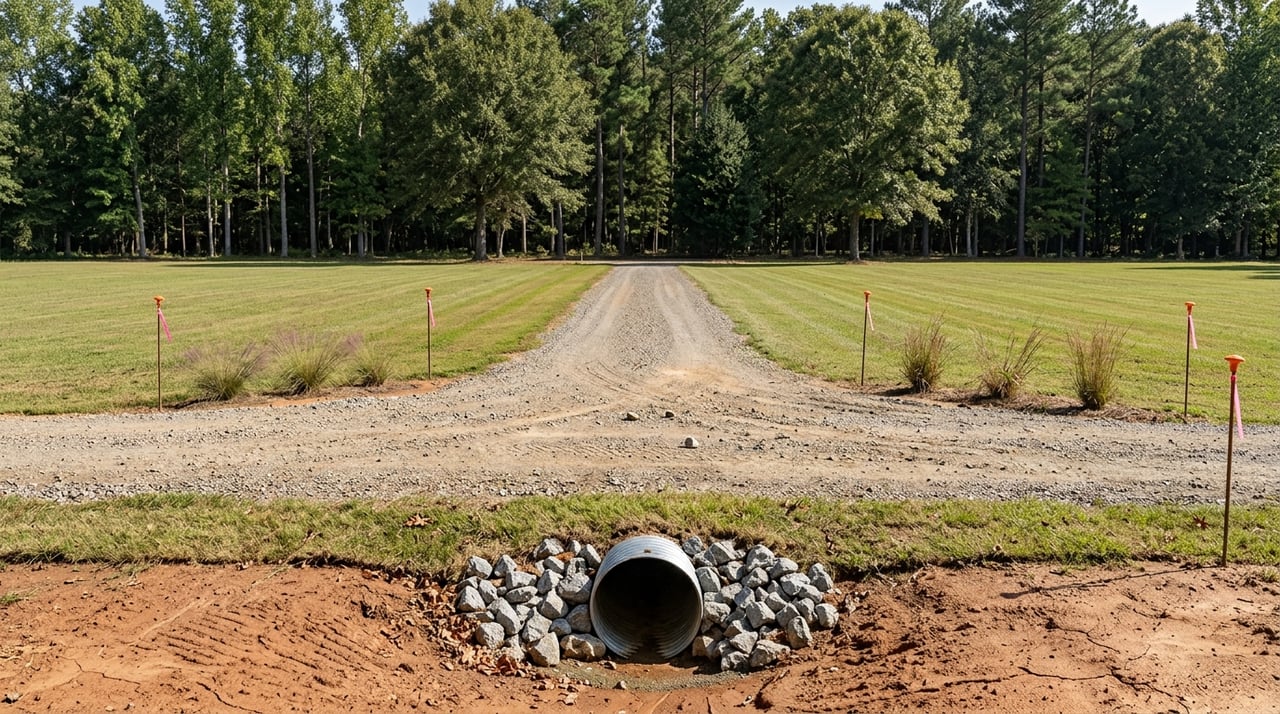
How To Sell Land In Luthersville
May 21, 2026
May 21, 2026
Selling land in Luthersville is not the same as selling a house, and that difference can affect your price, timeline, and buyer pool. If you own acreage, a homesite lot, or a parcel with future potential, you need more than a sign and a guess on value. You need to know what buyers will ask, what local agencies control, and what paperwork can make or break a deal. Let’s dive in.
Luthersville is a small city in Meriwether County, and that local setting shapes how land sells. The city covers about 3.1 square miles and has roughly 776 residents, while Meriwether County spans more than 500 square miles of land. That means your buyer may come from a much wider rural market, not just from within the city.
The buyer pool can also vary more than many sellers expect. In Meriwether County, the 2022 agricultural profile showed 308 farms and 92,208 acres in farms, with cropland, pastureland, and woodland all playing a meaningful role. In practical terms, your land could appeal to a farm operator, a rural homesite buyer, a pasture buyer, a timber-minded buyer, or someone looking for future development potential.
One of the first things you need to confirm is whether your parcel is inside the City of Luthersville or in unincorporated Meriwether County. That matters because the review path is different depending on where the property sits. A buyer who wants to build or change the use of the property will often need answers early.
In the city, the Planning Commission handles rezoning, conditional use, and variance applications, and it meets on the first Tuesday of each month at 5 PM at City Hall. At the same time, building and demolition permits for property inside the City of Luthersville are issued by Meriwether County. That split in responsibilities is one reason land transactions here can feel more technical than a typical home sale.
In unincorporated Meriwether County, the Department of Planning, Zoning, and Community Development reviews plans, issues permits, and inspects projects. The county also enforces zoning, flood damage prevention, environmental protection, and subdivision regulations. For you as a seller, this means the parcel’s current zoning and allowed use can directly affect value.
When buyers look at land in Luthersville, acreage is only part of the story. In many cases, use and access matter just as much, if not more. A 10-acre tract with clear access and strong buildability may attract more serious interest than a larger tract with unanswered questions.
The county permit requirements give a good picture of what buyers and their agents often want to verify. For permitting, the county requires a deed and plat, a current property-tax receipt, and a site plan showing property lines and easements. It also requires a health department letter for water, septic, and soil testing before permit issuance.
That is why these factors tend to carry the most weight:
Minimum lot area can also influence what a buyer can do. The county permit sheet lists minimum lot areas by zoning, including A-1 at 25 acres, RR at 10 acres, LDR at 5 acres, and RD at 2 acres, with road-type distinctions in some cases. If your parcel does not neatly match a buyer’s intended use, the sale may take longer or require additional approvals.
Utility answers can quickly separate a strong listing from a confusing one. Inside the city limits, water account applications and water tap-on applications are handled through the City of Luthersville. For addresses in the city, water service also includes trash pickup.
Outside the city, rural parcels often depend on septic approval rather than public sewer. That is why a health department letter related to water, septic, and soil testing is such an important item in the local process. If you already have this information, you can help buyers move from interest to action much faster.
Power information matters too. The county permit requirements ask for the power company name, which tells you that utility planning is part of the practical buildability review. Even if a parcel is beautiful, buyers still want to know how service will reach the site.
With land, preparation is usually more about documents than appearance. A house seller may focus on paint and staging, but a land seller often gets better results by organizing the property file before marketing begins. That makes it easier for buyers to evaluate the property with confidence.
Before you list, try to gather:
This preparation helps because county review is tied to specific documents. Missing information about access, property lines, or easements can slow buyer due diligence and create delays later in the contract period. If you do not have a copy of your warranty deed, the county tax office states that it can be obtained from the Clerk of Superior Court’s deed room at the courthouse.
Land pricing in Luthersville should be based on local comparable sales and the parcel’s actual use potential, not just a flat per-acre formula. The Meriwether County assessor states that values are determined from recent sales and market conditions as of January 1. That makes local comps especially important when your property has unique zoning, access, or utility conditions.
Broad benchmarks can provide general context, but they are not enough on their own. USDA’s 2025 farmland-value report showed Southeast averages of $5,750 per acre for farm real estate, $5,860 per acre for cropland, and $5,720 per acre for pastureland. Those numbers are regional averages, not direct pricing guides for a specific tract in Luthersville.
A strong pricing strategy should consider:
If you price based only on acreage, you risk missing what actually drives demand. Buyers are not just buying land area. They are buying what the land can realistically support.
Not every land buyer is looking for the same thing. The right marketing approach depends on the parcel type and the most likely use. This is where land-specific strategy can make a real difference.
For example, farm-oriented buyers often focus on acreage mix, usability, and function. A homesite buyer may care more about road frontage, septic suitability, and a manageable path to permitting. A buyer looking at future division or development may pay close attention to zoning, lot minimums, access, and subdivision costs.
If you plan to divide the property before selling, costs and timing can change quickly. Meriwether County’s subdivision application says a minor subdivision of 3 lots or less has a final plat approval fee of $500 plus $25 per acre up to 20 acres. For 4 or more lots, a preliminary plat request is $500 plus $15 per acre over 20 acres.
A clean, straightforward land sale can move efficiently, but many land deals take longer than home sales because buyers need more verification. If your parcel needs rezoning, subdivision approval, septic signoff, or boundary corrections, that can add time. It is better to plan for that early than be surprised after you go under contract.
The county’s permit sheet notes that residential permit review is generally 3 to 7 business days and commercial review is 7 to 14 business days. Still, zoning and subdivision matters usually follow a different track and may involve city or county planning review first. In other words, one part of the process may move quickly while another takes longer.
Your tax status can affect how smoothly the sale moves. Meriwether County says real estate taxes are due on December 20, and residents in the City of Luthersville pay both city and county taxes through the county tax commissioner. A clean tax record can help avoid unnecessary closing issues.
The county tax office also explains that Georgia property is taxed on assessed value, which is generally 40 percent of fair market value unless otherwise specified by law. Property returns are filed from January 1 through April 1, and assessment appeals usually must be filed within 45 days of the assessment notice. While that does not set your list price, it does provide helpful context for ownership records and valuation timing.
At closing, Georgia real estate transfer tax applies when title is transferred. The Georgia Department of Revenue states that the tax must be paid before a deed can be recorded with the superior court clerk, and that the seller is liable unless the contract allocates it differently. That is one more reason to review sale terms carefully before signing.
If you want to improve your chances of a clean sale, focus on clarity. Buyers tend to respond well when they can quickly understand what they are buying and what they can do with it. Uncertainty often lowers offers or stretches out the timeline.
A smart seller checklist includes:
Selling land in Luthersville can be highly rewarding when the property is positioned correctly. The key is to match your marketing, pricing, and documentation to the parcel’s real-world use and the local review process. If you want experienced guidance on how to prepare, price, and market your land, connect with Pristine Realty Group, LLC.
Stay up to date on the latest real estate trends.

Get assistance in determining current property value, crafting a competitive offer, writing and negotiating a contract, and much more. Contact us today.